What Is Digital Marketing?
In today’s fast-paced digital world, the way businesses connect with customers has completely changed. Traditional marketing methods like newspapers, hoardings, radio, and television are no longer enough on their own. With the rapid growth of the internet, smartphones, and social media, digital marketing has become an essential tool for businesses of all sizes. But what exactly is digital marketing, and why is it so important? Let’s understand it in detail.
Meaning of Digital Marketing
Digital marketing refers to all marketing efforts that use the internet or electronic devices to promote products, services, or brands. It involves reaching potential customers through digital channels such as search engines, websites, social media platforms, email, mobile apps, and online advertisements.
In simple words, digital marketing is the promotion of a business online. Whenever you see an ad on Instagram, search for something on Google and click a result, receive a promotional email, or watch a YouTube ad—these are all examples of digital marketing.
Evolution is this
Digital marketing started gaining importance with the growth of the internet in the late 1990s and early 2000s. Earlier, businesses mainly depended on offline methods like print ads and TV commercials. However, as people began spending more time online, marketers realized the potential of digital platforms.
Today, digital marketing has evolved into a powerful industry using advanced tools such as artificial intelligence (AI), data analytics, automation, and personalized marketing strategies to target the right audience at the right time.
Why Is Important?
Digital marketing is important because it allows businesses to connect with customers where they spend most of their time—online. Some key reasons why digital marketing is essential are:
- Global Reach – Businesses can reach customers across cities, countries, and continents.
- Cost-Effective – It is more affordable than traditional marketing, especially for small businesses.
- Targeted Marketing – Ads can be shown to a specific audience based on age, location, interests, and behavior.
- Measurable Results – You can track clicks, views, conversions, and sales in real time.
- Better Customer Engagement – Brands can directly interact with customers through comments, messages, and reviews.
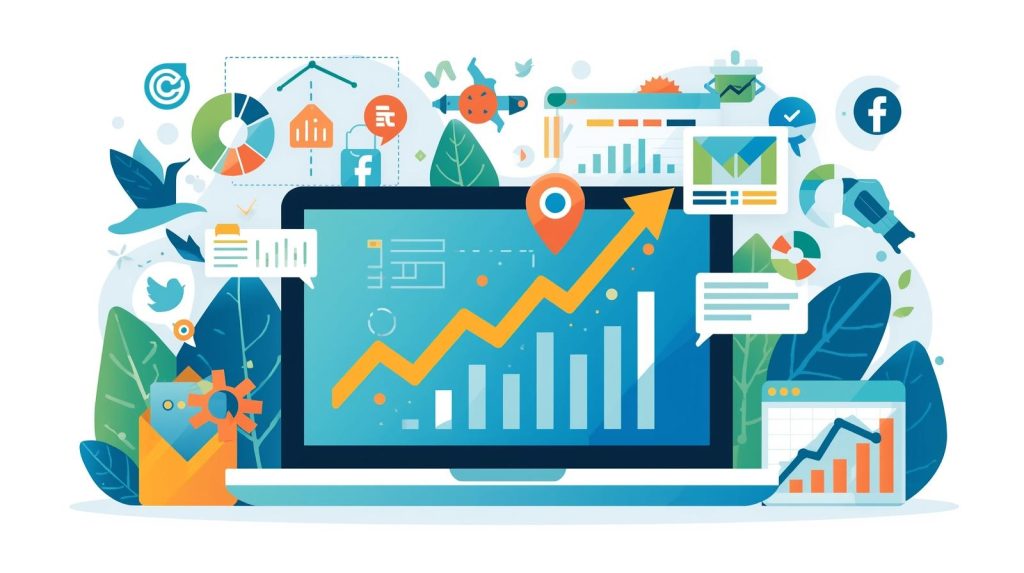
Types of Digital Marketing
Digital marketing is a broad field with several components. Each type plays a unique role in building an online presence.
1. Search Engine Optimization (SEO)
SEO is the process of optimizing a website to rank higher on search engines like Google. When users search for keywords related to your business, SEO helps your website appear on the first page of search results. Good SEO increases organic (free) traffic and builds long-term credibility.
2. Search Engine Marketing (SEM) / Pay-Per-Click (PPC)
SEM involves paid advertising on search engines. The most common form is Google Ads, where businesses pay only when someone clicks on their ad. It is a quick way to get visibility and traffic.
3. Social Media Marketing (SMM)
Social media marketing uses platforms like Instagram, Facebook, Twitter (X), LinkedIn, and YouTube to promote products and services. It helps brands build relationships, increase awareness, and engage directly with customers.
4. Content Marketing
Content marketing focuses on creating valuable and informative content such as blogs, videos, podcasts, infographics, and ebooks. The goal is to attract and educate the audience rather than directly selling to them.
5. Email Marketing
Email marketing involves sending promotional messages, newsletters, offers, or updates directly to users’ email inboxes. It is one of the most effective ways to build customer loyalty and increase repeat sales.
6. Affiliate Marketing
In affiliate marketing, businesses reward partners (affiliates) for bringing traffic or sales through their referral links. It is performance-based and widely used by bloggers and influencers.
7. Influencer Marketing
Influencer marketing uses popular social media personalities to promote brands. Influencers already have trust and followers, making it easier to reach a targeted audience.
8. Mobile Marketing
Mobile marketing targets users through smartphones using SMS, mobile apps, push notifications, and mobile-friendly ads.
How its Works
Digital marketing works by combining strategy, content, platforms, and data. First, a business identifies its target audience. Then, it chooses the right digital channels and creates engaging content. Campaigns are launched, and performance is tracked using analytics tools. Based on data, strategies are optimized for better results.
For example, an online clothing brand may use Instagram ads, SEO-friendly blogs, and email offers to attract and convert customers.
Advantages
Digital marketing offers several advantages over traditional marketing:
- Real-time performance tracking
- High return on investment (ROI)
- Easy personalization
- Flexible and scalable campaigns
- Strong brand visibility
It also allows small businesses to compete with big brands without needing a huge budget.
Challenges
Despite its benefits, digital marketing has some challenges:
- High competition
- Constantly changing algorithms
- Need for technical skills
- Data privacy concerns
- Time-consuming content creation
However, with the right knowledge and tools, these challenges can be managed effectively.
Career Opportunities in Digital Marketing
Digital marketing offers excellent career opportunities. Some popular roles include:
- Digital Marketing Executive
- SEO Specialist
- Social Media Manager
- Content Writer
- PPC Expert
- Email Marketing Specialist
- Digital Marketing Analyst
With increasing demand, digital marketing is one of the most promising career options today.
Conclusion
Digital marketing is no longer an option—it is a necessity for businesses in the modern world. It helps brands reach the right audience, build trust, and grow sales using online platforms. With its wide range of strategies, cost-effectiveness, and measurable results, digital marketing has become the backbone of modern business growth.
Whether you are a student, entrepreneur, or professional, understanding digital marketing can open doors to endless opportunities. As technology continues to evolve, digital marketing will only become more powerful and influential in shaping the future of business.
by; shakshee